
· 8 min read · Updated · Magical Proxy
Playtest First, Buy Later: Test a Deck Idea With Printed Cards
Most deck ideas fail on one expensive card that gets stuck in your hand. Test that cheaply with printed cards before you spend anything.
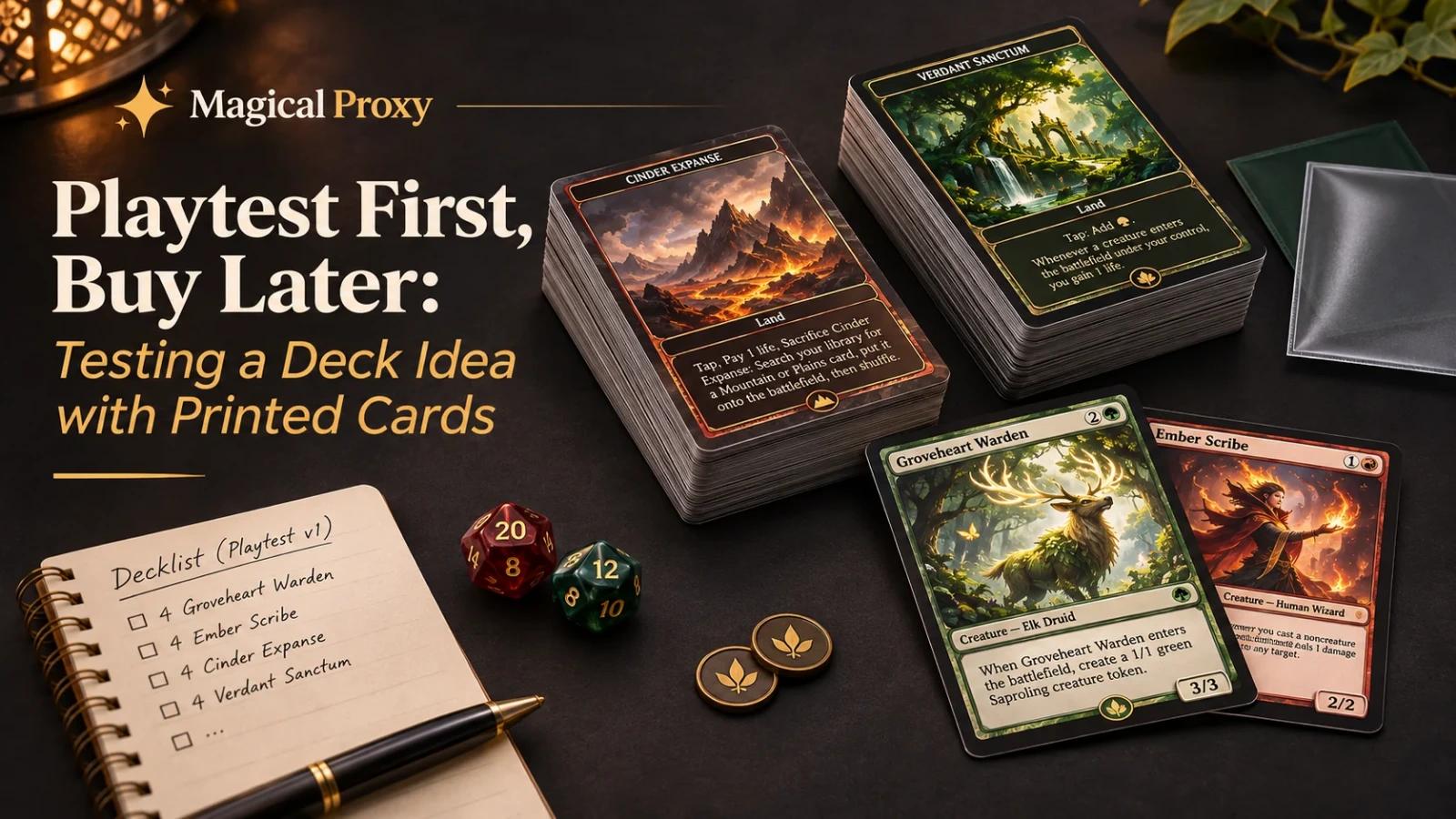
To test an expensive deck idea without buying it first, print only the 10 to 15 cards you are unsure about, play about ten games with one written list, and cut any card that keeps getting stuck in your hand. Printed cards are for casual play, testing and your own collection, so check the rules of any event before you bring them.
Most deck ideas fail for a boring reason. One card that looked great on paper keeps getting stuck in your hand, or never has a target, or costs you a turn every time you need it. You usually find that out after the cards are bought, sleeved and shuffled. A test set costs far less than that, and it lets you find the problem while the fix is still cheap.
This is a method for budget-minded players who want to try an expensive idea before committing. Our cards are printed for personal use, so everything here assumes casual play, testing and your own collection. Sanctioned tournaments generally do not allow proxies, and this is not advice for those events.
Decide what you are actually testing
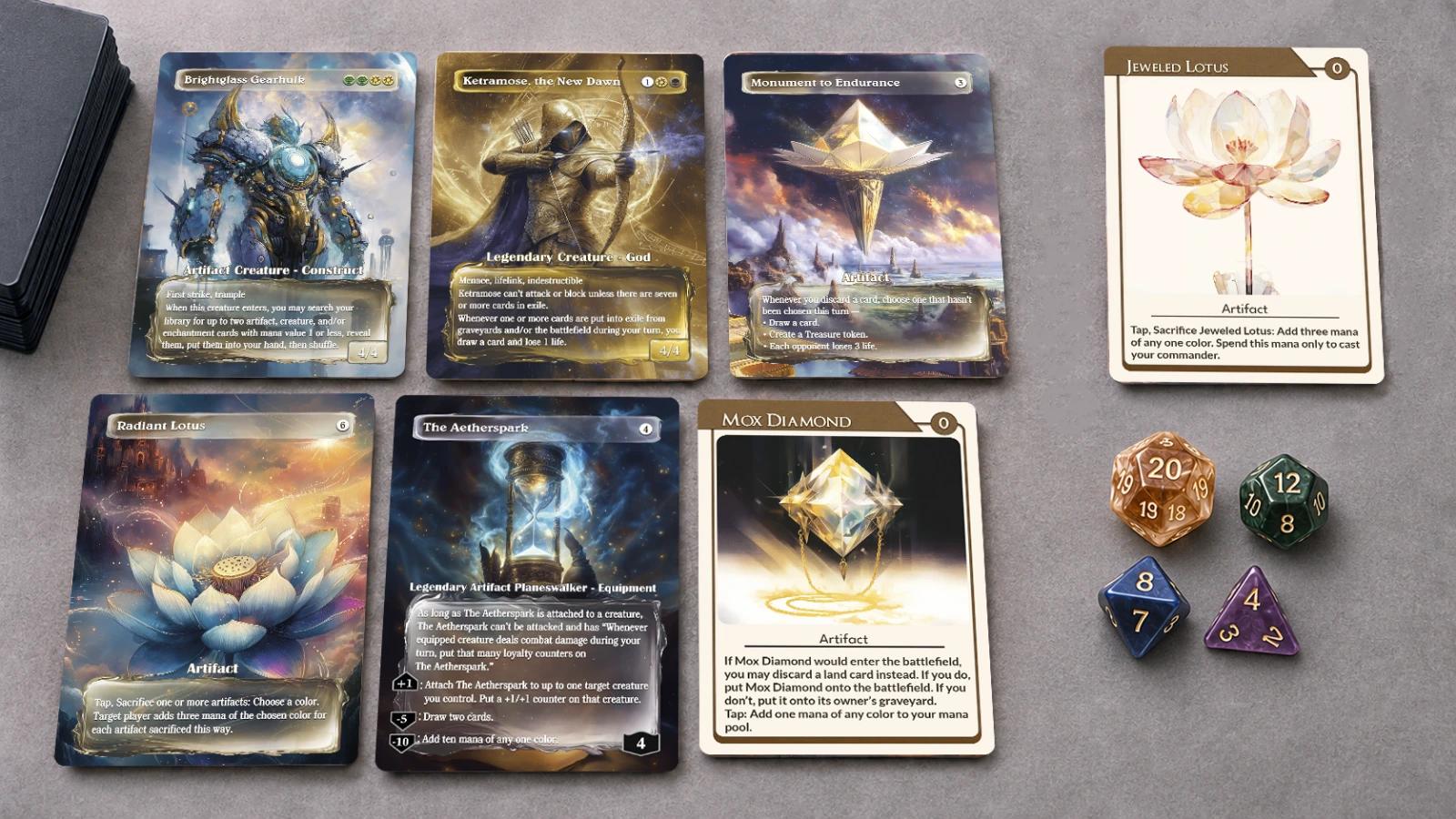
You do not need to print the whole deck. Most decks are defined by 10 to 15 cards: the ones you build around, the ones that do the heavy lifting, and the ones that are expensive. Print those as singles and fill the rest with cards you already own.
Big casual formats are the hardest to judge in your head. In a 100-card singleton deck most cards appear only once, a few expensive pieces carry the plan, and one misjudged card can leave a hand that does nothing for several turns. Test those pieces first.
Start by listing the cards you would be most annoyed to get wrong. For each one, write a single sentence that says what job it does and which turn it usually does it on. If you cannot write that sentence, the card probably does not belong in the test set yet.
Test in the regular finish. It costs less than foil, and foil can wait until the list has settled and you want something to show off. The printing and quality page explains both finishes.
Keep the cheap filler real. If your basic lands and common removal are cards you already own, the test stays focused on the dozen or so cards that cost money. Basic lands still need a plan, though. Their split decides whether the deck casts what it wants on time, so write the split on the list and use the same numbers in every test. If you want to print the mix, Land Packs let you choose how many of each land goes in.
Goldfish first, then play real games
Goldfishing means playing your deck alone, with no opponent, just to see how it draws. It is the fastest way to check consistency. How often do you find your key pieces by turn four? Does your mana work? How many dead draws show up in a row? Shuffle up, play out 20 turns or so, and write down what happened. Do it several times. A solo run takes a few minutes, and you can do it on a lunch break.
Goldfishing cannot tell you whether a card is good. It only tells you whether the card shows up. A removal spell with no targets looks fine when you are alone. A threat that only matters when someone attacks you looks worse than it is. For that, you need real games against people, even casual ones.
Our suggestion: goldfish until the deck stops embarrassing you, then play real games to make the judgment calls.
Keep notes across ten games
Ten games is a useful number. Fewer than that and you are mostly measuring luck. Many more and you are probably tuning for small gains that will not matter at the table. Ten games with the same list gives you enough repeats to see patterns, and notes are what turn patterns into decisions.
After each game, write down the following, on paper or on your phone, in a place you will not lose it:
- Keep or mulligan on the opening hand, and the reason in a few words
- The turn you cast each key card, or "never" if you did not
- The card that sat in your hand longest
- Whether you won, lost, or the game ended before the card mattered
- One sentence about the moment that decided the game
Keep the notes boring. The goal is to compare games later, not to write a diary. After ten games, read down the "stuck in hand" column first. That column usually tells the story.
Signs a card should be cut
A cut signal is a pattern across games, not one bad draw. These are the ones we would act on:
- The card sat in your hand in several games and you could not cast it when you wanted to
- You wished for a different card in that slot, every game
- The card only mattered in one matchup you are unlikely to face
- You skipped casting it because the board never offered a good target
- You would rather have drawn a basic land more than once
A card that wins one game for you is not automatically a keeper. If it only wins when everything else goes right, it is probably a luxury, and luxuries are what you buy last.
If you cut a card, swap in something cheap and test again for three or four more games. Do not swap four cards at once. You will not know which change helped.
Version the list, one change at a time
Keep the list in a plain document with a version number at the top. Version 1 is the first test. Each time you swap a card, save a new version and note what changed and why. After a few sessions, those notes are often more useful than the deck itself.
Keep test copies separate from your collection
This part is easy to skip and expensive to skip.
Test copies should never sit in the same sleeves, boxes or piles as your real cards. Mixing them means you lose track of what is what, and then you are tempted to bring a test card to a game where it does not belong. Our FAQ says printed cards are supplied for personal use and that reselling them to third parties is not permitted, so keeping them separate helps you stay on the right side of that too.
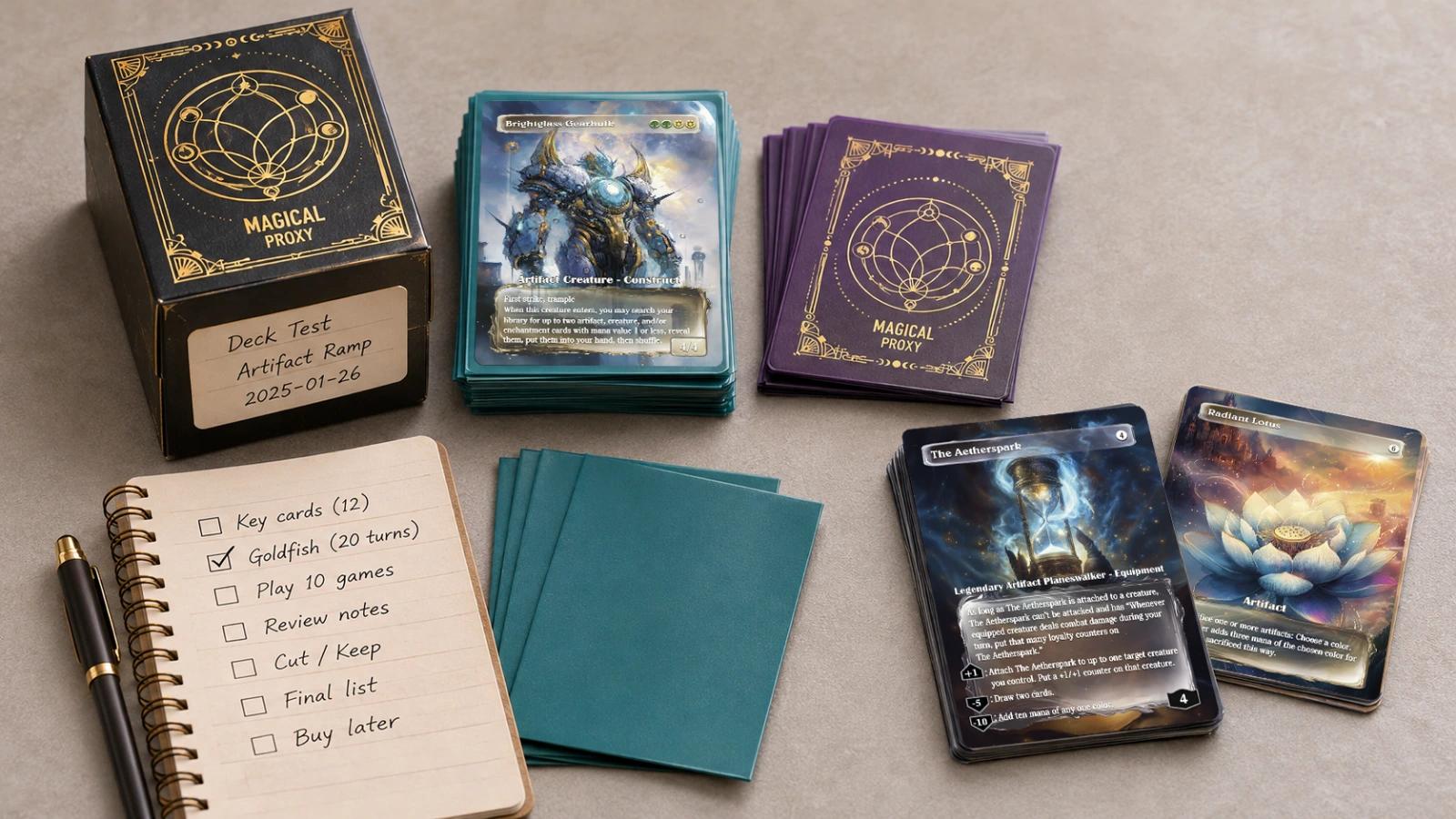
Use three things. First, a sleeve color for the test set that you do not use for anything else, so it is obvious across the table. Second, a separate deck box labeled as playtest cards, with the list version and the date. Third, a note on the box, not on the cards, saying what the test is for. Writing on the cards themselves wears them out, and you will not want to do that to a card you are still judging.
If you do buy originals later, keep the printed set in its own box. That way you can compare the two side by side and never mix them up.
Ask your playgroup before printed cards hit the table
Tell your group before you bring printed cards to the table. Some groups are happy to play with stand-ins for testing, and others want originals only. Say which cards are printed, let people look at them, and answer honestly if someone asks whether a card is an original.
Organized events set their own rules, and many do not allow printed cards. Check with the organizer before you bring a deck to a store night or a tournament, and leave the printed cards at home if you are not sure.
Never present printed cards as originals, and do not trade or sell them as if they were. If a list works and you want to play it somewhere that expects originals, buy the cards first.
When to stop testing
You could test forever. Stop when one of these is true:
- You have played about ten games, and the list has stopped changing for the last three or four
- Your notes show the deck does what you hoped, even if one or two cards disappoint
- You are changing cards for gains you cannot feel at the table
- The remaining doubts are about a matchup you do not play
When you stop, write a short list of what you now know: the cards you kept, the ones you cut, and the one question you could not answer. That last line matters. It tells you whether a second test is worth the effort or whether you should just buy.
Then buy. Start with the cards that survived, and buy them in the finish you tested with if you can. Keep the printed set in its box until your originals are in, sleeved and on the table. Play a few games with both and see whether anything surprised you. If nothing did, the test did its job.
Before you spend a dollar on originals: list the cards you are testing, play ten games, write one line per game, cut anything that got stuck in hand three times, and box the test set on its own. Then read how to check printed proxy cards when they arrive before you sleeve them.
Frequently asked questions
Do I need to print the whole deck?
No. Print the cards you are least sure about, which is usually the 10 to 15 cards that carry the deck or cost the most. You can print more after the first few games.
Can I use printed cards in a sanctioned event?
Generally no. Many organized events do not allow printed cards, and the organizer sets those rules. This article is about casual testing, so check the event rules before you bring anything.
Are printed cards the same as originals?
No. They are printed on our 330gsm black-core cardstock with our own card back, and they are made for playtesting and casual play. The FAQ covers personal use in more detail.
Related articles
How to Order Proxy Cards: Your First Magical Proxy Order
Singles, bundles, Land Packs, currency, shipping and tracking, walked through in order. Read it before your first cart and check each card name before you pay.
How to Prepare Custom Card Artwork: Size, Bleed and Files
The size, bleed, safe area and resolution a custom card needs, and how to send your artwork as an HTTPS link through Custom Orders.
How to Check Printed Proxy Cards When They Arrive
A two-minute check you can run at home with a desk lamp, a ruler and one card you already trust. It works on any printed card you are about to sleeve.